- July 24 2025
- | Personal Injury
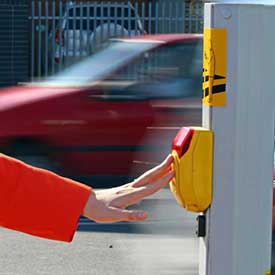
A walk can change your life. One moment, you are crossing the street on your way to a coffee shop, walking through a parking lot, or enjoying a jog through your neighborhood. The next, you are injured, frightened, and facing a future that looks nothing like the one you imagined just moments before.
After an accident, it’s natural to think that the path to recovery is straightforward. Someone was negligent, their insurance should cover the damages, and you can focus on healing. But when you are a pedestrian hit by a vehicle, the road ahead is often far more complicated than in a typical collision between two cars.
While both scenarios fall under the umbrella of personal injury, the differences between a pedestrian accident case versus a standard car accident case are vast and significant.
Car Accidents vs. Pedestrian Accidents
The most stark and obvious difference is the complete lack of protection for a pedestrian. A person on foot has no airbags, no seatbelt, and no two-ton steel frame to absorb the force of a crash. You are completely exposed.
This vulnerability means that the injuries sustained by pedestrians are almost always more severe, catastrophic, and life-altering than those in a typical car-on-car accident. While a fender-bender might result in whiplash or bruising, a pedestrian accident frequently leads to:
- Traumatic Brain Injuries (TBIs)
- Spinal Cord Damage and Paralysis
- Multiple Bone Fractures
- Severe Internal Organ Damage
- Permanent Disfigurement and Scarring
The recovery process from these injuries is not measured in weeks, but in months, years, or even a lifetime. It can involve emergency surgeries, extended hospital stays, intensive physical and occupational therapy, and the need for ongoing medical care and assistive devices. The emotional and psychological trauma—the fear, the anxiety, the post-traumatic stress—can be just as debilitating as the physical injuries.
This heightened severity immediately raises the stakes. The financial needs for medical care, lost wages from being unable to work, and long-term rehabilitation are exponentially higher. And when the stakes are higher, the fight to get fair compensation often becomes much more difficult.
The Complex Question of Fault and Blame-Shifting
In a collision between two cars, determining fault can sometimes be as simple as noting which driver ran a red light. In a pedestrian accident, however, insurance companies often work aggressively to shift the blame, even partially, onto the injured victim.
They know that under Nevada’s “modified comparative negligence” rule, if they can prove you were 50% or more at fault for the accident, they may not have to pay you anything. And even if they can prove you were just 10% at fault, they can reduce the amount they have to pay by that same percentage.
To do this, an insurer might try to argue that you:
- Were not in a designated crosswalk.
- “Darted out” into traffic unexpectedly.
- Were distracted by your phone or wearing headphones.
- Were wearing dark clothing at night, making you difficult to see.
While drivers have a significant duty of care to watch for and yield to pedestrians, an insurance company’s goal is to protect its profits, not to fairly assess the situation. They will investigate every possible angle to place blame on you, the injured party, in an effort to minimize or deny a potential settlement. This tactic can feel incredibly unjust and add immense stress to an already traumatic experience.
The Insurance Company’s Playbook for High-Stakes Cases
Because the financial payout in a pedestrian accident case is potentially significant, insurance companies often deploy a specific and aggressive set of tactics designed to frustrate, confuse, and wear you down. They are not on your side, and their friendly demeanor on the phone can be misleading. Their true goal is to pay out as little as possible.
Be wary of these common strategies:
- The Quick, Lowball Offer: The insurer may contact you very soon after the accident and offer a quick settlement. This may seem like a relief when medical bills start arriving. However, these initial offers are almost always far less than what you will need for your full recovery. They are offered before the true extent of your injuries and long-term needs are known, and accepting one means you forfeit your right to seek further compensation later.
- Requesting a Recorded Statement: An adjuster may ask for a recorded statement, framing it as a simple formality. In reality, they are trained to ask questions designed to elicit responses they can later use against you to imply you were at fault or that your injuries are not as severe as you claim.
- Delaying and Denying: The insurer might drag out the process, demanding endless paperwork and documentation, hoping that financial pressure and sheer frustration will force you to either give up or accept an unfair offer. They may also dispute the necessity of the medical treatments your own doctors have prescribed, claiming they are unreasonable or unrelated to the accident.
Facing these tactics alone while trying to recover from a serious injury can feel like an impossible battle. You are focused on healing, while the other side is focused on its bottom line.
Why Deep Knowledge of Insurance Matters
Handling a pedestrian accident claim isn’t just about proving the driver was at fault. It is about winning a battle against a powerful insurance company that has a team of adjusters and lawyers dedicated to protecting its interests.
This is where having a deep, focused understanding of insurance law becomes a critical advantage. It’s about more than just personal injury; it’s about knowing how to read complex insurance policies, identify all possible sources of coverage, and counter the specific, unfair tactics that insurers use to deny rightful compensation. A Reno pedestrian accident attorney who truly understands the insurance industry’s inner workings can anticipate their moves and build a case designed not just to prove negligence, but to hold the insurer accountable for treating you fairly.
Leverty & Associates Law: Your Compassionate Advocates in a Difficult Fight
At Leverty & Associates Law, we understand that the aftermath of a pedestrian accident is one of the most difficult times in a person’s life. We know that you are not just a case file; you are a member of our community who is hurting and in need of help. Our firm is built on a foundation of compassion and a deep commitment to our clients.
With more than 100 years of combined experience, our team-oriented approach ensures that every case benefits from our collective knowledge. We have secured more than $150 million for our clients over the years because we are attentive, dedicated, and relentless in our pursuit of justice.
If you or a loved one suffered injuries in a pedestrian accident and are facing an unfair battle with an insurance company, we are here to listen, provide an accurate assessment of your case, and stand up for you.
We offer free consultations and work on a contingency fee basis, which means you pay nothing unless we win for you. For a free, no-obligation consultation to discuss your case, please call our Reno office at (775) 322-6636.
 With his master’s in insurance law, Patrick routinely helps individuals and businesses who are having issues with their insurance company. He also has extensive experience with personal injury actions, complex tort actions, product liability matters, and class actions. Patrick Leverty is rated AV by Martindale Hubbell (the highest rating) and has been granted membership in the Million Dollar Advocate Forum, and Multi-Million Dollar Advocate Forum. Patrick Leverty has been certified as a Personal Injury Specialist by the State Bar of Nevada. [